Eyam – the plague village

Eyam is a village in the Peak District. It is a quaint English town, set against the backdrop of an incredible history.

Eyam is famous for the collective actions of the town during the great plague, and how the town prevented the bubonic plague from spreading to the north of England.

The story begins in 1665, when a tailor ordered a delivery of fabric from London. At the time London was in the middle of an 18 month epidemic of Bubonic Plague, the final epidemic to hit Britain (ending in 1666). During this epidemic almost a quarter of Londons population died. The cause of Bubonic plague is Yersinia pestis bacterium, which is transmitted by fleas, the fabric that was delivered to Eyam was infested with infected fleas.

The transmission of Plague to Eyam was not the unusual part of the story however, that was how the village responded.

From May 1666 Eyam introduced measures such as outdoor church services, families burying their own dead, 

The Village completely shut itself down, no one traveled in or out for the entire epidemic. They received provisions from nearby villages, these were left at points on the village outskirts and collected later, money was left in holes filled with vinegar ontop of stones. The vinegar prevented any bacteria travelling in the money across the border of the quarentined village. The village was quarentined for 14 months, and roughly 273 villagers died out of the 350 population. The survivors seemed random, especially as some survivors were in close contact with the diseased. 

The Village today has amazing records from the parish, registering the dead and also the stories of families and individuals during the quarentine. It tells a story of incredible hardship and grief, but also strength, love and community. It would have only taken one person disobeying the quarentine to ruin all the sacrifices of the villagers.

Eyam’s story has been retold many times, and is often used to learn from for new diseases, especially since the actions of the village successfully prevented the great plague from spreading to the north of England.

For more information check out the museum in Eyam: https://www.eyam-museum.org.uk/
Curare

I first came across the drug Curare in the Yelena Zaltana series of books by Maria V Snyder. The drug runs through the book series as a method used for both good and evil, as a relaxant for various procedures and also as a poison. Although I knew that curare was a real thing,  I was unaware when I first read the series just how accurate her use of Curare is. We covered the drug in detail in my Introduction to Toxicology lectures, and I thought I could share that knowledge here:

Curare is a resin obtained from the bark of South American trees of the genera Strychnos and Chondrodendron that causes paralysis of voluntary muscle. It acts by blocking the action of the neurotransmitter acetylcholine at neuromuscular junctions. The name curare is derived from the native Guyana Mukusi Indian word Wurari or Woorari. it is now called d-tubocurarine or just curare. Its use originates from South American natives coating blow dart tips with the resin and using it in hunting. The poison paralyses and kills prey, while not preventing them from being eaten, as curare has no effect when consumed. It has to enter the bloodstream directly.

A Brief Timeline – some of these dates are debated.

  • There is no written record of when curare was first extracted and used on blowdarts. However, we know that the process was perfected and in common use well before the first encounters with explorers.
  • In 1596 Sir Walter Raleigh referenced a substance that is now thought to be Curare in his book ‘ The Discovery of the Large, Rich, and Beautiful Empire of Guiana‘, where he talks of the poisoned arrows shot by natives at the invading parties. He was curious to identify the poison but did not detail anything, he may have brought specimens back of this substance.
  • In 1780, Abbe Felix Fontana identified the action of curare on voluntary muscles, instead of acting on the heart and nerves as previously thought.
  • In 1800, Alexander von Humboldt described the extraction of curare from vines/lianas.
  • In 1811, Sir Benjamin Collins Brodie determined that complete recovery from curare poisoning is possible provided artificial ventilation/ breathing is maintained.
  •  In 1825 Curare was first brought to Britain by Charles Waterton, Squire of Walton Hall. Waterton is chiefly remembered for his association with curare, and for his writings on natural history and conservation. David Attenborough has described him as “one of the first people anywhere to recognise, not only that the natural world was of great importance, but that it needed protection as humanity made more and more demands on it”.  Waterton injected a donkey with curare and then using a pair of blacksmiths bellows he kept the animal breathing artificially until the curare finished acting.
  • In 1835 Sir Robert Hermann Schomburgk classified and named the vine Strychnos toxifera.
  • In 1850, George Harley demonstrated that curare could be used to treat tetanus and strychnine (a common rat/pest poison) poisoning.
  • By 1868, Claude Bernard and Alfred Vulpian had identified the site of action of curare as the motor endplate.
  • From 1887, curare was marketed for medical use by Burroughs Welcome.
  • In 1900, Jacob Pal recognized that physostigmine could be used to antagonize the effects of curare.
  • In 1912, Arthur Lawen demonstrated the use of curare during surgery, but this potential was not realized as the finding was published in German.
  • In 1935, Harold King isolated d-tubocurarine and described its structure (as a crystalline alkaloid) and continued to study it for 13 years, publishing at least 10 papers on the subject.
  • In 1936 Dale revealed the role of acetylcholine in neuromuscular transmission and the mechanism of action for curare.
  • In 1938 Richard C. Gill brought enough crude curare paste back to America to perform human studies, Some American accounts credit Gill with the introduction of curare to western medicine, though you can see from this timeline that that introduction happened almost 400 years earlier. However, Gill was a big part of introducing Curare to the US.
  • In 1940, Abram Elting Bennett revealed that curare could be used to reduce trauma during metrazol-induced convulsive therapy for spastic disorders in children.
  • In 1942, Harold Griffith and Enid Johnson used curare to augment general anaesthesia when performing an appendectomy
  • Curare was used surgically until the development of safer synthetic neuromuscular blocking analogues such as Pancuronium (in 1964), Vecuronium (in 1979), Mivacurium (in 1993), and Rocuronium (in 1994).

References:

S.A. Burr and Y.L. Leung, Curare (D-Tubocurarine), Encyclopedia of Toxicology, 2014, pages 1088-1089

T.C. Gray, Harold King, Anaesthesia, 199 1, Volume 46, pages 679-682

A.E. Bennett, The History of the Introduction of Curare into Medicine. Anesthesia & Analgesia. 1968 – Volume 47 – Issue 5 – p 484-492

Curare – an overview, Science Direct, https://www.sciencedirect.com/topics/neuroscience/curare

The First Book of Medicine and Egyptian Doctors

The first recorded book that was solely for medicinal research was the Ebers Papyrus, written around 1500BC.  It was created in Egypt, where it is also thought the first specific doctor practiced – in 3000BC Sekhet-eanach healed the Pharaoh’s nostrils. It is not known what was wrong with the nostrils in the first place. Ancient Egyptian medicine is a fascinating mix of magic and science – in a time where science was not well known, magic was as good an explanation of illness as any. However, they still searched for a natural cause to illness as well as magical. The human body was largely unknown, the Egyptians believed it to be full of channels – like irrigation canals, that when blocked caused illness. This led to the majority of herbal medicines being used to stimulate vomiting or other excretory methods.

It is well known that the Egyptians were adept at embalming and preserving the dead, they were also quite advanced in their surgical methods. they were able to splint broken bones and heal most wounds. They had an understanding of cleanliness and were able to take advantage of the antiseptic properties of honey and willow bark to prevent infections – despite no indication of germ theory for centuries.

The Ebers Papyrus contains over 700 magical formulas and fables to treat all sorts of maladies – from how to rid the house of pests to how to treat a crocodile bite.

It is fantastic how well humans through history have been able to notice the abilities of the world around them and harness it, often without understanding why it works. This is common in medicine and other areas of research and development.

Looking into the Body

Last week in my university labs I had the opportunity to hold and investigate a human brain, as part of our anatomy sessions. This was an amazing priviledge for me and it led me to investigate how the structures of the brain were first identified. This led me to the topic of this post… Post Mortem examinations across history.

Post mortem exams, also known as autopsies have been around as long as the medical profession, the first recorded was in ancient Greece by Galen of Peragumum, the first physician to associate symptoms displayed by the patient with the results of a dissection.

Developments through history:

During the medieval period it was considerered a crime to dissect the human body without agreement from religious leaders, meaning they didnt happen. This changed with people such as Leonardo Da Vinci who completed several autopsies in order to complete his studies of the human body.  Along with other noted physicians, this work gave way for religious approval of the act.

The 1800’s showed a large number of autopsies being carried out, with the more regulated practices of established medical examiners and coroners. Introduction to the modern-day autopsy was pioneered by Karl Rokitansky of Vienna, who had completed more than 30,000 autopsies in his career,  Rokitansky was the first to examine every part of the body, with a systematic and thorough approach. However, it was his competitor, Rudolf Ludwig Karl Virchow, who used microscopy to examine each organ carefully.

The 1800’s were also when events such as the Burke and Hare murders occured, as grave robbing for medical purposes was so prolific the graves were running out of bodies.

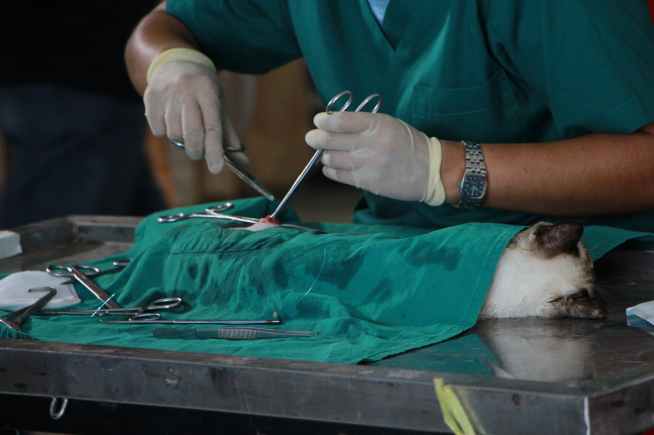
adult animal care clinic
Photo by Pranidchakan Boonrom on Pexels.com

Post Mortem examinations now :

Modern autopsies are only completed when the cause of death is uncertain and foul play may be suspected, for example Asbestos as a cause of death can be detected in autopsy. The results help the family of the dead get justice from unsafe workplaces or other judicial peace of mind. Modern doctors still use autopsies to learn about the human body, both in teaching hospitals and Universities (for students like me) and also with rare conditions to help future sufferers.

There have been many medical developments attributed to post mortem examinations, for example the discovery of the language centres of the brain; Broca and Wernicke areas of the left hemisphere of the brain.  Obviously the main discoveries are the organs, and how they work, how Galen’s theory was eventually disproved and many more amazing things that show us just how amazing the human body is.


Oils, balms and beeswax!

As a continuation of my previous post about my historical re-enactment physicianary adventures I have an update! We steeped a collection of the herbs in oil for several weeks before straining and bottling them. These herbs include rosemary, clove, lavender, garlic and a few others that may not be as authentic, such as raspberry. We are now at a bit of a standstill, as we need to reach apprentice level in the re-enactment society to use any of our herbs or oils at a show. However, we have ordered some beeswax, and will be attempting to make some balms from the oils after the university holidays are over.

Update, and random facts!

I haven’t been writing anything wonderfully sciencey in a while, due to exams and life and everything else. So here is a quick snippet about one of my favourite random science facts!

Did you know that Grass ants cannot digest grass?

The ants are most commonly seen carrying grass cuttings from your lawn to their homes, deep cavernous tunnels full of thousands of ants. It is a general assumption that they eat said cuttings, however the cellulose in the cell walls of grass cells is indigestible by ants and humans alike. This is because it is insoluble in water so cannot be broken down in the stomach. However, grass ants display an unusual mutualistic relationship between ant and fungi. Fungus-growing ants actively propagate, nurture and defend the basidiomycete cultivar. In return the fungi provide the ants with nutrients, as the fungus can break down the cellulose that the ants cannot.
Now this is an incredibly random bit of information, one my biology teacher passed on in our first A-level lesson, it has stuck with me, and has joined the list of facts I know that are too random to ever be needed even at a pub quiz. Other facts on that list include that hummingbirds lay tic-tak shaped eggs and that cannibals reportedly prefer human eyes to other organs when eating.

THE BEGINNING OF A SERIES

So within my medieval reenactment group (Historia Normannis) a friend and I have been exploring the 12th century medicine, with the intention of creating our own reconstructions to test at shows. Despite knowing that the majority of these herbal remedies are homeopathic, I am very curious to see if they have any healing capacity. We are using resources put together by the society, to form a medieval herb garden. From this we plan to make oils and balms and ointments to treat various ailments from bruising to pain relief to more serious conditions. (Don’t worry we will be making sure everything is completely safe first!)

I thought since I started this blog to explore the history of medicine, that this would be a perfect place to track and record our experiments and findings.

The journey so far: after an exciting trip to the local garden centre and a lot of repotting… our herb garden is off to a good start! We have a whole bunch of plants, which I will go into more detail about in a futher post. We have also been and bought a lot of the more obscure herbs from a herbalist in the city. Again these purchases will be explained in the future.

The next steps are to start some oil infusions, particularly of rosmary, clove, lavender and a few others. These will take a few weeks to infuse before we can make balms from them.  In the meantime we are focusing on learning the herbs by sight and smell, as labels were not historically authentic.

Vaccinations

Due to the current outbreaks of measles, I thought it pertinant to address the science of vaccinations.

First discovered in 1796 by Edward Jenner, Vaccinations have led to the erradication of some of the worst diseases such as Smallpox, and are on the way to placing even more in the history books. Jenner found that milkmaids who had suffered with Cowpox, were not suceptible to Smallpox. He inoculated a boy with the Cowpox virus, let him recover, then exposed him to Smallpox. Amazingly the boy did not develop Smallpox symptoms at all! This was the first vaccine. Since then vaccinations have evolved massively, and now offer no risk to patients, despite widespread myths.

One of the major cases leading to the Anti-vaccine movement was when Andrew Wakefield et al. published a document claiming that the MMR vaccination causes Autism. The paper, published first in The Lancet on the 28th February 1998, used a case study of 8 children, out of 12 studied, who all showed symptoms of Autism within 1 month of receiving the MMR vaccine. The connection claimed was that the vaccine caused intestinal inflammation which allowed the diffusion of normally non digested protein molecules from the intestines into the bloodstream. Wakefield inferred that these travelled to the brain where the affected development and caused autism. The 8 children all had this intestinal inflammation.
There were several issues with the study they conducted. The first being that there was no control variable, this meant that there was no way of scientifically establishing whether a link, between the MMR vaccine and Autism, was a cause and effect relationship or a coincidence. The probability that it was a coincidence is quite high, as in 1998, 1 in 2000 children were diagnosed with Autism. This meant that statistically the number of children developing autism after have the vaccine was 25 children per month. Therefore the exclusion of a control group shows that the results could be purely coincidental.
Other issues within the study and its conclusions include; a lack of complete or systematic data collected from the children, meaning the data cannot be fully represented. Giving young infants unnecessary invasive testing which the team did not have the correct permissions to conduct, making the study ethically unsound. The publication bias that occurred when choosing which children’s data to include in the published study was the largest proof of data mishandling. The study tested more than 12 children, as explained by Brian Deer in the British Medical Journal’s published analysis of the case.
“When I broke the news to the father of child 11, at first he did not believe me. “Wakefield told us my son was the 13th child they saw,” he said, gazing for the first time at the now infamous research paper which linked a purported new syndrome with the measles, mumps, and rubella (MMR) vaccine. “There’s only 12 in this.””
The statement from the parent shows that Wakefield had chosen which children to include in order to present the view of the data that he needed. This is an unarguable case of bias showing the negative effect the mishandling causes, both in public opinion and the vaccine crisis it stimulated. “Immunization rates in Britain dropped from 92 percent to 73 percent, and were as low as 50 percent in some parts of London”.
Public opinions led to this crisis of anti-vaccination, and even now years later, public opinion still regards the case as infamous.


Morphine, the first painkiller

In ancient medicine, some plant derivatives were used to alleviate pain including: alcohol, cannabis, mandrake, and opium.  Before the development of general anesthesia, surgery was only performed out of extreme necessity. It is probable that a drug such as opium would have been given following surgery although its use may not have been recorded. The first description of postoperational opium was by James Moore in 1784.

The development of Morphine is probably regarded as the biggest step forward in drug history. It was the first alkaloid drug to be extracted from poppies.Morphine was isolated from opium by Friedrich Serturner in 1805. He was a 21-year-old pharmacist’s assistant. He wondered about the medicinal properties of opium, which was widely used by 18th-century physicians.

In a series of experiments, performed in his spare time and published in 1806, Serturner managed to isolate an organic alkaloid compound from the resinous gum secreted by the opium poppy. He found that opium with the alkaloid removed had no effect on animals, but the alkaloid itself had 10 times the power of processed opium. Sertuner named that substance morphine, after Morpheus, the Greek god of dreams, for its tendency to cause sleep.

In 1853, the hypodermic needle was developed and the use of morphine became more widespread. From its earliest application, it was used as a form of pain relief and that is still how it is meant to be used today. Since then, various delivery systems for morphine have been developed, these include oral suspensions, pills and more.

Antibiotic Resistance

This is a phrase that is big in the media at the moment, with big pharmaceutical companies offering rewards to those who solve this problem, but what does it mean?

Antibiotic resistance is, in basic terms where the antibiotic drugs we take for bacterial infections stop having an effect on the bacteria. This will stop us being able to treat these, and may lead to people dying from infections such as gangrene.

The antibiotic penicillin works by keeping a bacterium from building a cell wall. Bacteria and human cells also differ in the structure of their cell membranes and the machinery they use to build proteins or copy DNA. Some antibiotics dissolve the membrane of just bacterial cells. Others affect protein-building or DNA-copying machinery that is specific to bacteria.

Antibiotic resistance is caused by several things, such as patients demanding antibiotics when they do not need them. Part of this is due to the current lack of ability to tell whether a disease is viral or bacterial. People need to attempt to reduce the number of antibiotics they take, especially for non threatening infections, if they don’t the antibiotics will not be able to help for incredibly serious and life threatening infections.