
Last week in my university labs I had the opportunity to hold and investigate a human brain, as part of our anatomy sessions. This was an amazing priviledge for me and it led me to investigate how the structures of the brain were first identified. This led me to the topic of this post… Post Mortem examinations across history.
Post mortem exams, also known as autopsies have been around as long as the medical profession, the first recorded was in ancient Greece by Galen of Peragumum, the first physician to associate symptoms displayed by the patient with the results of a dissection.
Developments through history:
During the medieval period it was considerered a crime to dissect the human body without agreement from religious leaders, meaning they didnt happen. This changed with people such as Leonardo Da Vinci who completed several autopsies in order to complete his studies of the human body. Along with other noted physicians, this work gave way for religious approval of the act.
The 1800’s showed a large number of autopsies being carried out, with the more regulated practices of established medical examiners and coroners. Introduction to the modern-day autopsy was pioneered by Karl Rokitansky of Vienna, who had completed more than 30,000 autopsies in his career, Rokitansky was the first to examine every part of the body, with a systematic and thorough approach. However, it was his competitor, Rudolf Ludwig Karl Virchow, who used microscopy to examine each organ carefully.
The 1800’s were also when events such as the Burke and Hare murders occured, as grave robbing for medical purposes was so prolific the graves were running out of bodies.
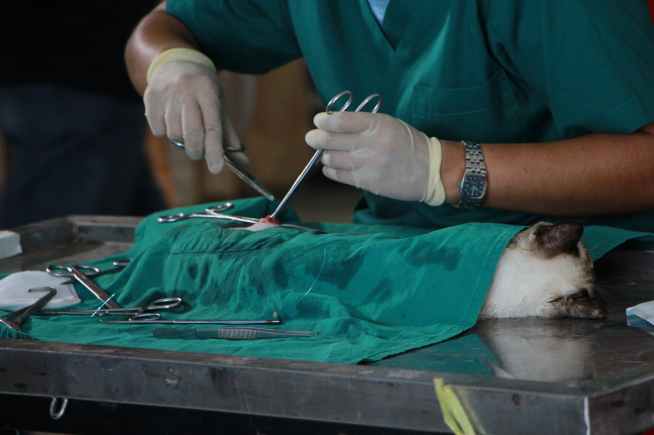
Post Mortem examinations now :
Modern autopsies are only completed when the cause of death is uncertain and foul play may be suspected, for example Asbestos as a cause of death can be detected in autopsy. The results help the family of the dead get justice from unsafe workplaces or other judicial peace of mind. Modern doctors still use autopsies to learn about the human body, both in teaching hospitals and Universities (for students like me) and also with rare conditions to help future sufferers.
There have been many medical developments attributed to post mortem examinations, for example the discovery of the language centres of the brain; Broca and Wernicke areas of the left hemisphere of the brain. Obviously the main discoveries are the organs, and how they work, how Galen’s theory was eventually disproved and many more amazing things that show us just how amazing the human body is.
 Catherine's Science Blog